
Full body massage techniques, often detailed in comprehensive massage guide PDFs, encompass a range of methods for therapeutic benefit and relaxation, offering a deeply enjoyable experience.
These techniques, like those found in readily available resources, aim to address muscle tension and promote overall well-being through skilled application and understanding.
Exploring full body approaches, as documented in various PDFs, provides a pathway to enhanced physical and mental health, utilizing established protocols and personalized adjustments.
What is Full Body Massage?
Full body massage is a holistic therapeutic practice involving the manipulation of soft tissues throughout the entire body, often detailed in full body massage techniques PDF guides. It extends beyond localized treatment, addressing interconnectedness of muscles and systems.
These guides illustrate techniques like effleurage, petrissage, and tapotement applied sequentially from head to toe, promoting circulation and relieving tension. A massage guide emphasizes a systematic approach, covering the back, legs, arms, abdomen, and head.
Unlike focused treatments, a full body session aims for complete relaxation and restoration, utilizing varied pressure and rhythm. PDFs often include illustrations and step-by-step instructions for self-massage or partner application, enhancing accessibility and understanding of these beneficial techniques.
It’s a comprehensive approach to wellness, as outlined in numerous resources.
Benefits of Full Body Massage
Full body massage, as detailed in full body massage techniques PDF resources, offers a multitude of benefits extending beyond simple relaxation. These guides highlight improved circulation, reducing muscle tension and promoting lymphatic drainage.
A massage guide often emphasizes stress reduction, lowering cortisol levels and boosting mood through endorphin release. Regular sessions, as described in PDFs, can alleviate chronic pain, improve sleep quality, and enhance flexibility.
Furthermore, full body techniques can aid in digestive health, as gentle abdominal massage stimulates peristalsis. Many PDFs also detail the psychological benefits, fostering a sense of well-being and body awareness.
These comprehensive benefits, readily accessible through detailed guides, make it a valuable component of a holistic health regimen.

Preparation for a Full Body Massage
Full body massage techniques PDF guides stress creating a calming atmosphere, client consultation, and understanding contraindications for a safe and effective therapeutic session.
Creating a Relaxing Environment
Full body massage techniques PDF resources consistently emphasize the crucial role of environmental preparation. A tranquil space significantly enhances the massage experience, promoting deeper relaxation and maximizing therapeutic benefits. Dim lighting, achieved through lamps or adjustable fixtures, is frequently recommended to soothe the senses.
Gentle background music, often instrumental and nature-inspired, further contributes to a calming atmosphere. Temperature control is also vital; the room should be comfortably warm to prevent chilling during the massage.
Cleanliness and organization are paramount, ensuring a hygienic and inviting space. Aromatherapy, utilizing essential oils (discussed elsewhere), can be incorporated, but client sensitivities must be considered. Finally, soft linens and comfortable cushioning enhance physical comfort, completing the relaxing environment.
Essential Oils and Their Uses
Full body massage techniques PDF guides frequently detail the integration of essential oils to amplify therapeutic effects. Lavender is widely recommended for its calming and stress-reducing properties, promoting relaxation during the massage. Eucalyptus offers invigorating benefits, aiding in muscle recovery and respiratory relief.
Peppermint can provide a cooling sensation, easing muscle soreness and headaches. Roman chamomile is known for its soothing qualities, ideal for anxiety and insomnia.
However, PDF resources strongly caution proper dilution with carrier oils (like jojoba or almond oil) to prevent skin irritation. Always conduct a patch test before full application, and be mindful of client allergies or sensitivities. Responsible use enhances the massage experience, but safety is paramount.
Client Consultation and Contraindications
Full body massage techniques PDF guides emphasize the critical importance of thorough client consultation. This involves discussing medical history, current health conditions, and any medications being taken. Identifying contraindications is paramount for safe practice.
Absolute contraindications, as detailed in these resources, include fever, infectious skin diseases, acute inflammation, and certain cardiovascular conditions. Relative contraindications – requiring physician approval – encompass pregnancy, cancer, and osteoporosis.
PDFs stress the need to inquire about allergies, sensitivities, and areas of pain or discomfort. Informed consent is essential, ensuring the client understands the procedure and potential risks. A detailed consultation protects both the client and the practitioner.
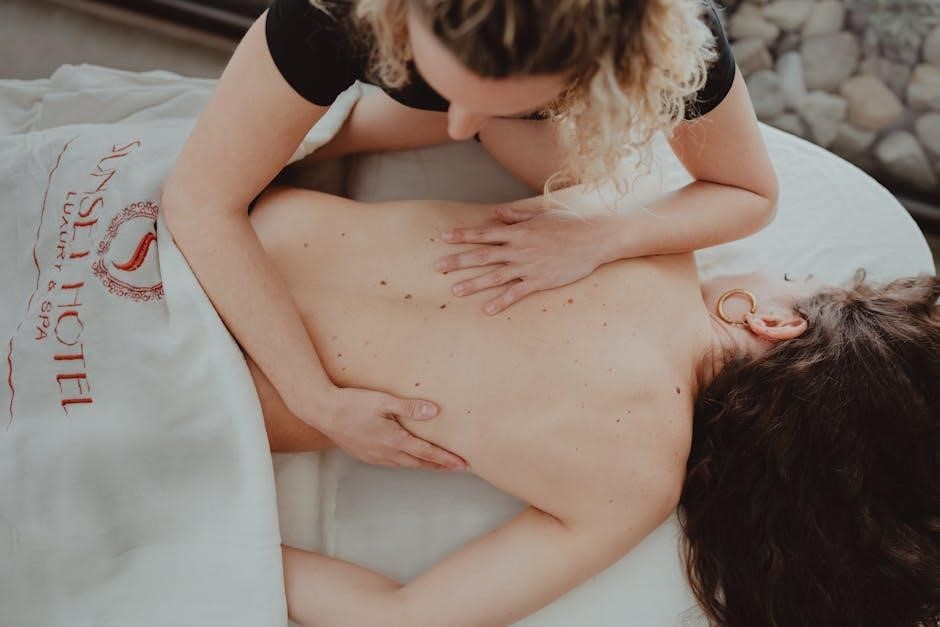
Massage Techniques for the Back
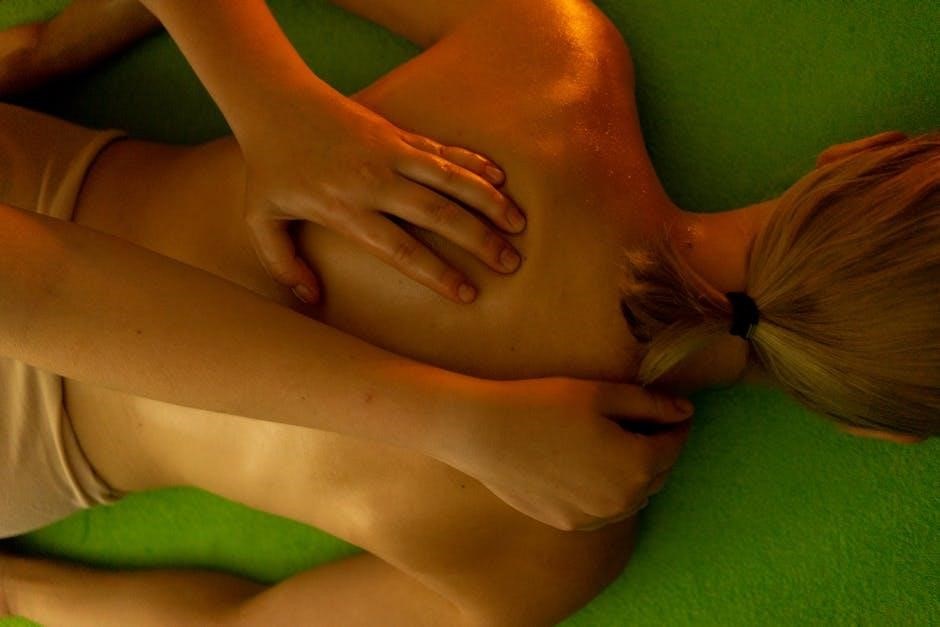
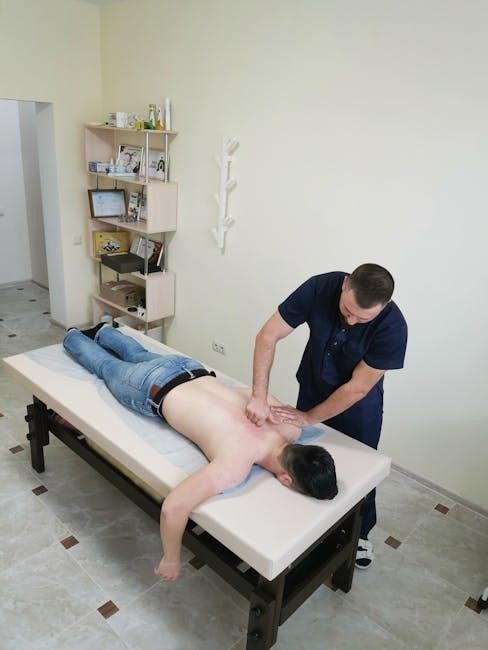
Full body massage techniques PDF resources detail back massage as foundational, utilizing effleurage, petrissage, kneading, and tapotement to release tension and promote relaxation.
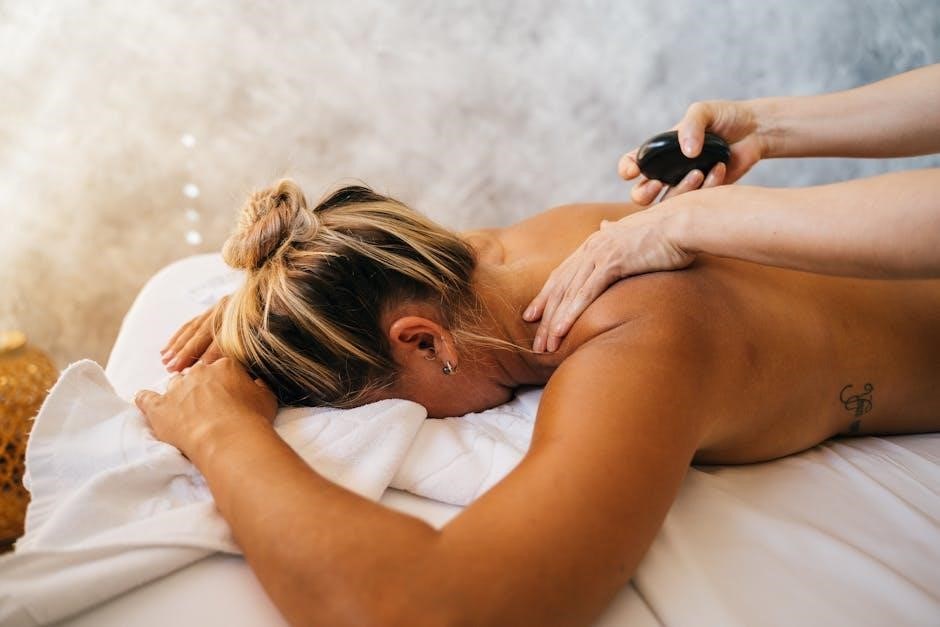
Effleurage for Back Relaxation
Effleurage, as detailed in full body massage techniques PDF guides, is the cornerstone of back work, employing long, gliding strokes to warm tissues and establish a connection.
These strokes, typically beginning at the base of the spine and moving upwards towards the shoulders, utilize the palms of the hands with gentle, even pressure.
The purpose is to spread lubricant, relax superficial muscles, and assess the back for areas of tension or asymmetry, as highlighted in instructional materials.
Returning strokes are often performed alongside the spine, avoiding direct pressure on the bony structures.
Repetition of these flowing movements promotes circulation, calms the nervous system, and prepares the back for deeper techniques, as outlined in comprehensive PDFs.
Proper effleurage is crucial for creating a relaxing and receptive state for the client.
Petrissage for Back Muscle Release
Petrissage, extensively covered in full body massage techniques PDF resources, involves kneading, squeezing, and lifting muscles to release deeper tension within the back.
Unlike the flowing strokes of effleurage, petrissage focuses on working directly into the muscle tissue, improving elasticity and reducing adhesions.
Techniques include skin rolling, wringing, and circular kneading, all performed with a firm but controlled pressure, as demonstrated in detailed guides.
These movements help to break down muscle knots, increase blood flow, and promote lymphatic drainage, contributing to pain relief and improved function.
PDFs emphasize alternating hands and working systematically across the back muscles, ensuring even treatment and preventing fatigue.
Proper petrissage requires anatomical knowledge and sensitivity to the client’s response.
Kneading Techniques for Deep Back Tension
Kneading, a core component detailed in full body massage techniques PDF guides, specifically targets deep-seated tension within the back muscles, utilizing rhythmic compression.
This technique involves lifting, squeezing, and releasing muscle tissue, mimicking the action of kneading dough, as illustrated in instructional materials.
PDFs emphasize varying the pressure and depth based on the client’s tolerance and the severity of the tension, ensuring comfort and effectiveness.
Different kneading variations, like circular kneading and transverse kneading, address specific muscle groups and tension patterns.
Effective kneading breaks down adhesions, increases circulation, and promotes muscle relaxation, alleviating chronic back pain and stiffness.
Proper form and body mechanics, as outlined in guides, are crucial to prevent therapist fatigue and ensure a safe, therapeutic experience.
Tapotement for Back Invigoration
Tapotement, frequently illustrated in full body massage techniques PDF resources, employs rhythmic striking movements to invigorate the back muscles and stimulate the nervous system.
This technique, also known as percussion, utilizes various hand shapes – cupping, hacking, pounding, and tapping – each offering a unique stimulation.
PDF guides emphasize the importance of maintaining a light, brisk rhythm, avoiding heavy force that could cause discomfort or injury.
Tapotement enhances circulation, loosens muscles, and can help to relieve fatigue, providing a revitalizing effect to the back area.
It’s often used towards the end of a massage session to awaken the muscles and leave the client feeling energized.
Proper technique, as detailed in instructional PDFs, involves keeping the wrists loose and utilizing the forearm for power and control.
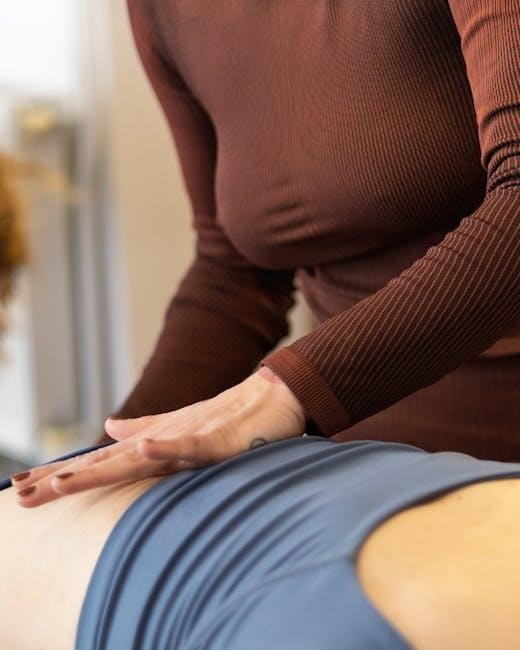
Massage Techniques for the Legs and Feet
Leg and foot massage, detailed in full body massage techniques PDF guides, focuses on circulation and relief, utilizing effleurage, compression, and reflexology points.
These techniques promote relaxation and address muscle tension.
Effleurage for Leg Circulation
Effleurage, a foundational technique detailed in full body massage techniques PDF guides, is employed to initiate leg massage and enhance circulation. This involves long, gliding strokes applied with varying pressure, typically beginning at the ankles and moving upwards towards the thighs.
The direction of strokes should generally follow venous return – towards the heart – to assist lymphatic drainage and reduce swelling.
These smooth, continuous movements warm the tissues, preparing them for deeper work.
Consistent, rhythmic effleurage improves blood flow, delivering oxygen and nutrients to muscles while removing metabolic waste products.
PDF resources emphasize the importance of maintaining a relaxed hand position and using the entire palm to distribute pressure evenly, creating a soothing and invigorating sensation.
Compression for Calf Muscle Relief
Compression techniques, thoroughly illustrated in full body massage techniques PDF guides, are vital for addressing calf muscle tension and promoting relief. This involves rhythmic pressing and releasing of the calf muscles, utilizing the palms, thumbs, or forearms.
PDF resources detail how compression helps to knead the muscle fibers, breaking down adhesions and increasing blood flow to the area.
The technique should be applied slowly and deliberately, allowing the muscle to respond to the pressure.
Alternating between compression and release encourages lymphatic drainage, reducing swelling and alleviating soreness.
Proper form, as demonstrated in instructional PDFs, ensures effective muscle manipulation without causing discomfort, providing targeted relief for tight calf muscles.
Foot Massage Techniques: Reflexology Points
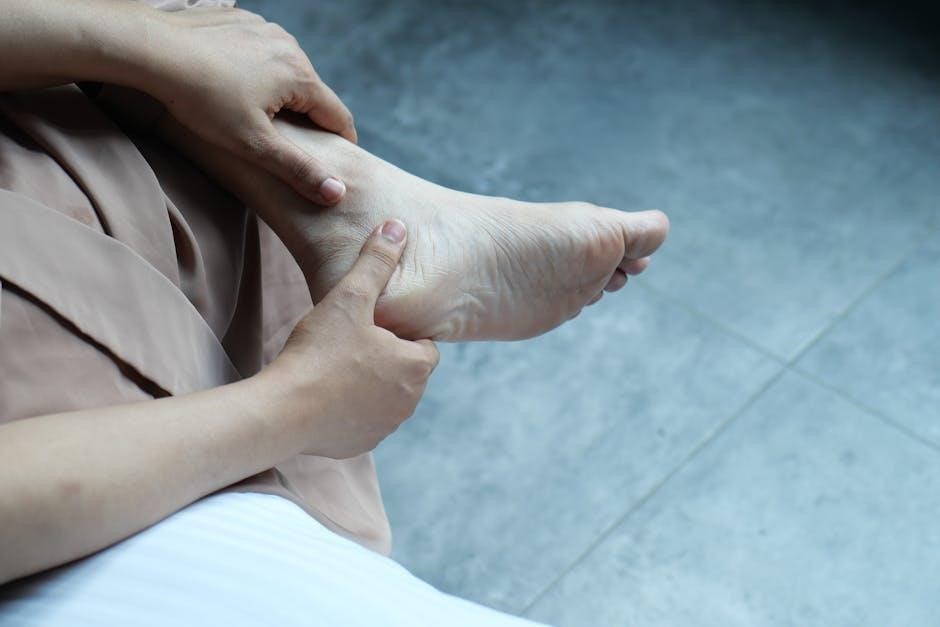
Foot massage techniques, extensively covered in full body massage techniques PDF guides, often incorporate reflexology points – specific areas on the feet corresponding to different body parts. Applying pressure to these points is believed to promote healing and relaxation throughout the entire body.
PDF resources detail maps of these reflexology zones, illustrating how stimulating the foot can impact organs and systems.
Techniques include thumb walking, where the thumb applies firm, circular motions across the foot, and direct pressure on specific points.
These methods aim to release tension, improve circulation, and restore balance, offering a holistic approach to wellness.
Detailed PDFs provide guidance on locating and effectively working with these reflexology points for optimal therapeutic benefit.
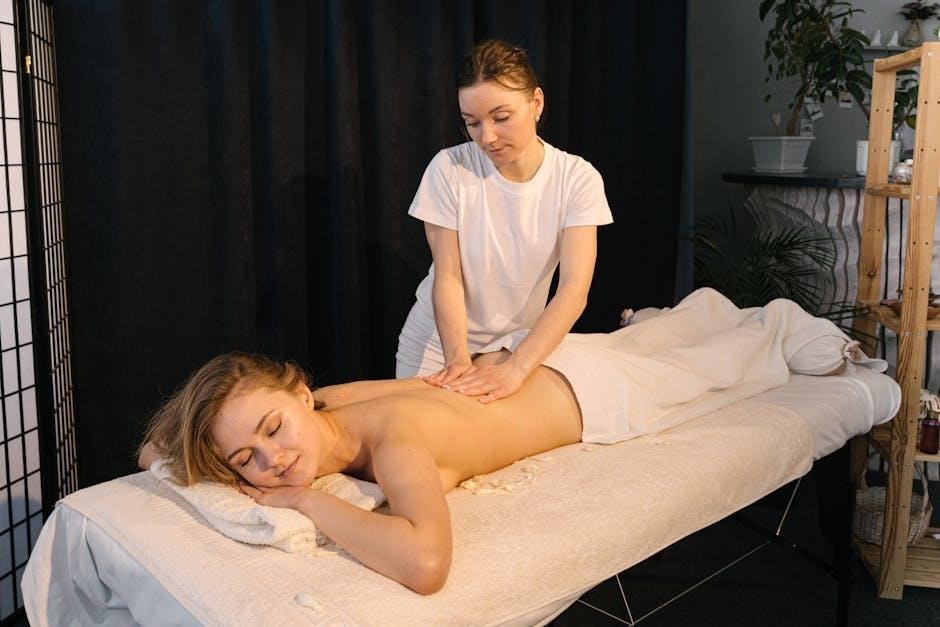
Massage Techniques for the Arms and Hands
Full body massage techniques PDF guides detail arm and hand massage, utilizing effleurage and petrissage to release tension and improve circulation for overall wellness.
Effleurage for Arm Relaxation
Effleurage, a foundational technique detailed in full body massage techniques PDF guides, involves long, gliding strokes applied with the palms of the hands along the arm’s length.
Beginning at the shoulder and moving towards the hand, these strokes should be rhythmic and consistent, utilizing light to moderate pressure to warm the tissues and promote relaxation.
The purpose is to spread lubricant, assess muscle tone, and initiate a sense of calm. Variations include superficial and deeper effleurage, adapting to the client’s needs.
Circular effleurage around the elbow and wrist joints can further enhance relaxation and improve joint mobility.
Consistent application of effleurage prepares the arm muscles for deeper work, like petrissage, and establishes a soothing rhythm throughout the massage session.
Petrissage for Arm Muscle Release
Petrissage, as illustrated in full body massage techniques PDF resources, follows effleurage and focuses on kneading, squeezing, and lifting arm muscles to release tension.
Techniques include circular kneading with the thumbs and fingers, wringing motions along the biceps and triceps, and skin rolling to separate muscle fibers.
This deeper work increases blood flow, breaks down adhesions, and improves muscle elasticity. Petrissage targets specific muscle groups, addressing knots and areas of tightness.
Applying firm, but comfortable pressure is crucial, always monitoring the client’s response.
Proper petrissage enhances muscle recovery, reduces soreness, and restores optimal function, complementing the initial relaxing effects of effleurage for a comprehensive arm massage.
Hand Massage Techniques: Pressure Points
Hand massage techniques, detailed in full body massage techniques PDF guides, often incorporate pressure point therapy, rooted in traditional Chinese medicine principles.
Specific points on the hand correlate to various body systems; applying focused pressure can alleviate related discomforts. The Hegu point (between thumb and index finger) eases headaches and pain.
The Laogong point (center of the palm) soothes heart issues and anxiety. Gentle, circular motions or sustained pressure are used, respecting the client’s tolerance.
These techniques enhance circulation, reduce tension, and promote relaxation throughout the body, extending the benefits beyond the hands themselves.
Referencing a PDF ensures accurate location and application of these powerful pressure points for a holistic massage experience.
Massage Techniques for the Abdomen and Chest
Full body massage techniques PDF resources detail gentle abdominal work for digestion, alongside cautious chest massage approaches, emphasizing safety and client comfort always.
Gentle Abdominal Massage for Digestion
Full body massage techniques PDF guides frequently highlight gentle abdominal massage as a key component for promoting healthy digestion. This technique utilizes slow, circular motions, typically clockwise, following the natural path of the colon.
The pressure applied should be light and comfortable for the client, avoiding deep pressure that could cause discomfort. The intention is to stimulate peristalsis – the wave-like muscle contractions that move food through the digestive tract – and relieve bloating or constipation.
Many resources emphasize starting with gentle effleurage strokes before moving into small, circular movements. Practitioners should always inquire about any abdominal sensitivities or medical conditions before performing this technique, ensuring a safe and beneficial experience for the client. Proper technique, as detailed in these PDFs, can significantly aid digestive wellness.
Chest Massage Techniques (Cautionary Notes)
Full body massage techniques PDF resources often address chest massage with significant cautionary notes due to the delicate nature of the area. Direct massage of the pectoral muscles requires extreme care and a thorough understanding of anatomy.
Contraindications are numerous, including any history of respiratory issues, heart conditions, recent surgeries, or skin infections. Avoid direct pressure on the sternum or ribs; Techniques, when appropriate, typically involve gentle effleurage along the upper chest and shoulders, focusing on muscle tension rather than deep tissue work.
PDF guides strongly advise practitioners to prioritize client comfort and obtain informed consent. Always respect boundaries and be prepared to modify or omit chest massage entirely if the client expresses any discomfort or concern. Prioritize safety and ethical practice.
Massage Techniques for the Head and Neck
Full body massage techniques PDF guides detail scalp massage for relaxation and neck techniques to relieve tension, promoting overall well-being through focused application.
These methods offer therapeutic benefits and stress reduction.
Scalp Massage for Relaxation
Full body massage techniques PDF resources consistently highlight scalp massage as a powerful tool for inducing deep relaxation and alleviating tension headaches. Begin with gentle, circular motions using your fingertips, covering the entire scalp area.
Apply moderate pressure, gradually increasing it as the muscles loosen. Focus on areas where tension is most prominent, such as the temples and the base of the skull.
These guides often recommend incorporating effleurage – long, gliding strokes – to stimulate circulation and further promote relaxation.
Many massage manuals emphasize the importance of slow, rhythmic movements, encouraging the client to breathe deeply throughout the process.
Consistent practice, as detailed in these PDFs, can reduce stress, improve sleep quality, and enhance overall mental clarity.
Neck Massage Techniques: Relieving Tension
Full body massage techniques PDF guides frequently detail neck massage as crucial for releasing accumulated tension, often stemming from stress or poor posture. Begin with gentle warming effleurage strokes, gliding from the base of the skull down towards the shoulders.
Utilize kneading (petrissage) techniques to address deeper muscle knots, applying firm but comfortable pressure. Circular motions with the thumbs can target specific trigger points.
These resources emphasize caution, advising against direct pressure on the spine.
Many massage manuals recommend incorporating gentle stretching and range-of-motion exercises to further alleviate stiffness.
Consistent application, as illustrated in these PDFs, can significantly reduce neck pain, improve flexibility, and promote a sense of calm and well-being.
Advanced Techniques
Full body massage techniques PDF resources often explore deep tissue work, trigger point therapy, and myofascial release for targeted relief and enhanced therapeutic outcomes.
Deep Tissue Massage Techniques
Deep tissue massage techniques, extensively detailed within full body massage techniques PDF guides, focus on realigning deeper layers of muscles and connective tissue.
These techniques involve slower, more forceful strokes, utilizing fingers, thumbs, elbows, and forearms to release chronic muscle tension and address specific problem areas.
PDF resources emphasize the importance of anatomical knowledge and careful assessment to avoid discomfort, focusing on areas like the back, legs, and shoulders.
Practitioners learn to identify and address adhesions – knots – within the muscle fibers, improving range of motion and reducing pain.
Proper body mechanics and client communication are crucial, as detailed in these guides, ensuring a safe and effective deep tissue experience.
Trigger Point Therapy
Trigger point therapy, thoroughly explained in full body massage techniques PDF resources, centers around identifying and releasing hyperirritable spots within skeletal muscle.
These “knots” can cause localized pain or referred pain to other areas of the body, impacting movement and function. PDF guides detail precise palpation techniques to locate these points.
Sustained pressure is applied to the trigger point, often combined with stretching or ischemic compression, to deactivate it and restore normal muscle function.
Effective therapy, as outlined in these guides, requires understanding pain patterns and anatomical connections, allowing for targeted treatment.
Clients may experience temporary discomfort during release, but lasting relief and improved mobility are the ultimate goals, as demonstrated in detailed PDF illustrations.
Myofascial Release
Myofascial release, comprehensively covered in full body massage techniques PDF guides, addresses restrictions within the fascia – the connective tissue network surrounding muscles.
These restrictions can cause pain, limited range of motion, and postural imbalances. PDF resources illustrate techniques utilizing slow, sustained pressure.
Therapists apply gentle, prolonged stretches to the fascia, encouraging it to release and return to its natural length and flexibility.
Unlike deep tissue work, myofascial release focuses on the connective tissue rather than the muscle itself, promoting holistic healing.
Detailed PDF diagrams demonstrate how fascial lines connect throughout the body, emphasizing the importance of a whole-body approach for optimal results and lasting comfort.
Resources and Further Learning
Full body massage techniques PDF guides offer detailed instruction, while online courses and workshops provide hands-on training for skill enhancement and certification.
Recommended Full Body Massage PDF Guides
Numerous full body massage techniques PDF guides are available, catering to diverse learning preferences and skill levels. These resources often provide detailed anatomical illustrations, step-by-step instructions for various techniques – including effleurage, petrissage, and tapotement – and crucial safety considerations.
Beginners may find introductory guides focusing on Swedish massage particularly helpful, while more experienced practitioners might explore advanced PDFs covering deep tissue work or myofascial release. Look for guides that emphasize client consultation, contraindications, and proper body mechanics to ensure safe and effective practice.
Several online platforms host collections of these PDFs, offering a convenient way to access a wealth of knowledge. Remember to critically evaluate the source and author’s credentials before relying on any specific guide for practical application.
Online Courses and Workshops
Complementing full body massage techniques PDF guides, online courses and workshops offer interactive learning experiences. These platforms often feature video demonstrations, live Q&A sessions with instructors, and opportunities for peer feedback, enhancing skill development beyond static materials.
Many courses cover foundational techniques detailed in PDFs, but also delve into advanced modalities like trigger point therapy and myofascial release. Look for accredited programs that meet professional standards and offer continuing education credits.
Workshops, both virtual and in-person, provide hands-on practice under the guidance of experienced therapists. Combining PDF study with dynamic coursework ensures a comprehensive understanding and confident application of full body massage principles.